
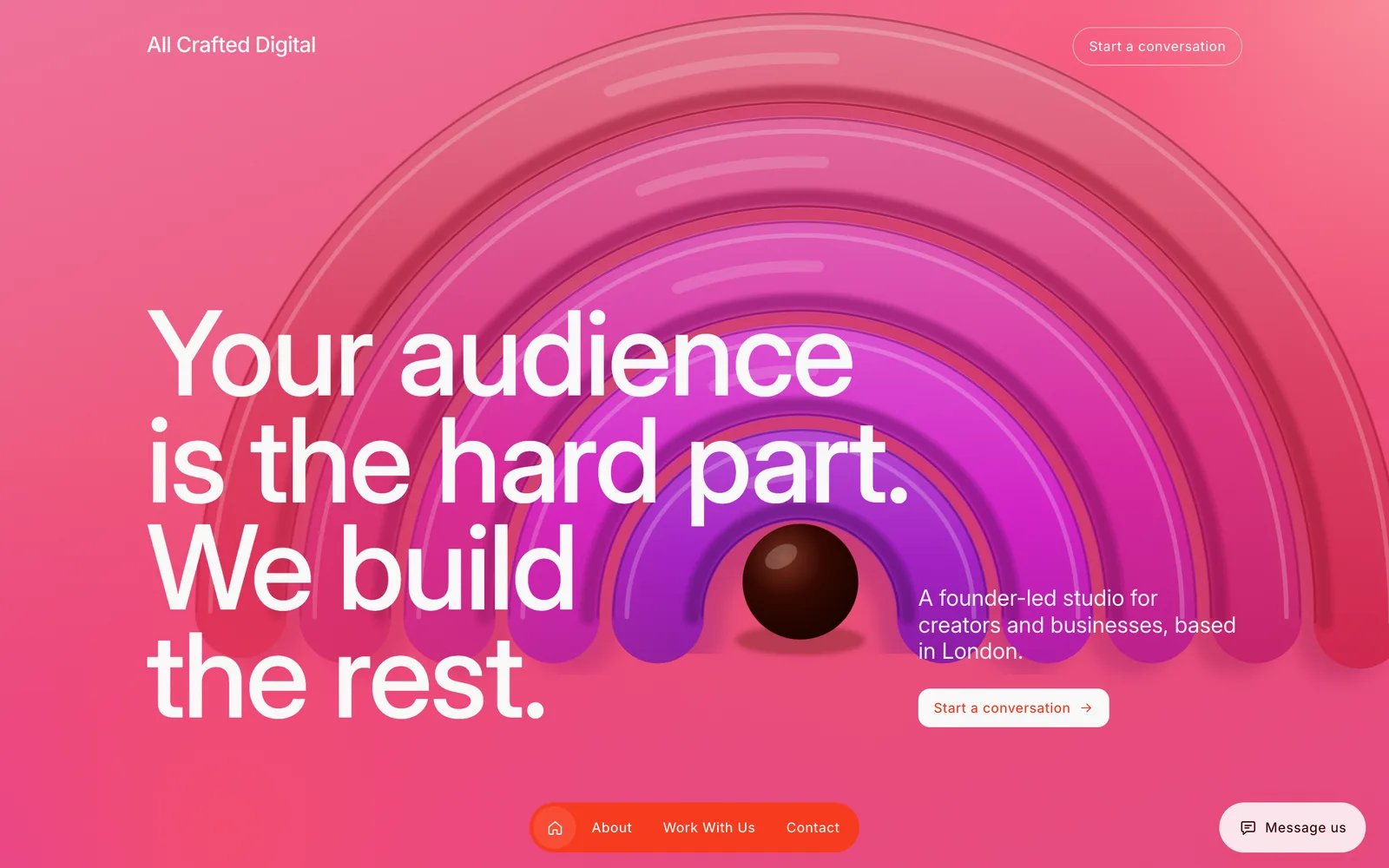
LiveCreator and influencer partnership studio
All Crafted Digital
A premium studio site that tells creators who we are in ten seconds.
- React
- TypeScript
ServicesSaaS Development
We build online products where customers can sign up, pay for access and manage their own accounts. We plan the user experience, payments and permissions around the service you want to offer.
How it works
Data, access, billing and release, one layer at a time. Click a step to jump to it, or switch the plan in step three to watch a payment turn a subscription Active.
Step 1 of 4
1 · Model
2 · Secure
| Role | Billing | Invite | View |
|---|---|---|---|
| Owner | |||
| Admin | |||
| Member |
3 · Bill
Starter: up to 5 seats
SubscriptionPending
4 · Ship and grow
Sample data for illustration.
Model. Tenants, users, plans and invoices are designed together, so every customer organisation only ever sees its own data.
Who it is for
What we build
Sign-up, invitations and permissions with Clerk, so each customer organisation only sees its own data.
Stripe plans, trials, invoices and webhooks, with usage and plan limits enforced in the product itself.
Tenant-aware tables in Supabase or documents in Convex, with access rules checked on the server.
First-run set-up flows and transactional email through Resend, such as invites, receipts and reminders.
A back-office screen to see accounts, change plans and support customers without touching the database.
How we work
We agree the smallest version that is worth paying for and what can wait until real customers ask for it.
We design accounts, roles, plans and data together before any screens, because these are the hardest things to change later.
We build in short cycles and run sign-up, upgrade and cancel journeys end to end in Stripe's test mode.
We release to early customers, watch what they do and plan the next release from that.
Related work
Each project is labelled Live, Demo or Coming soon, so you can see what is in use today and what is on its way.
A premium studio site that tells creators who we are in ten seconds.
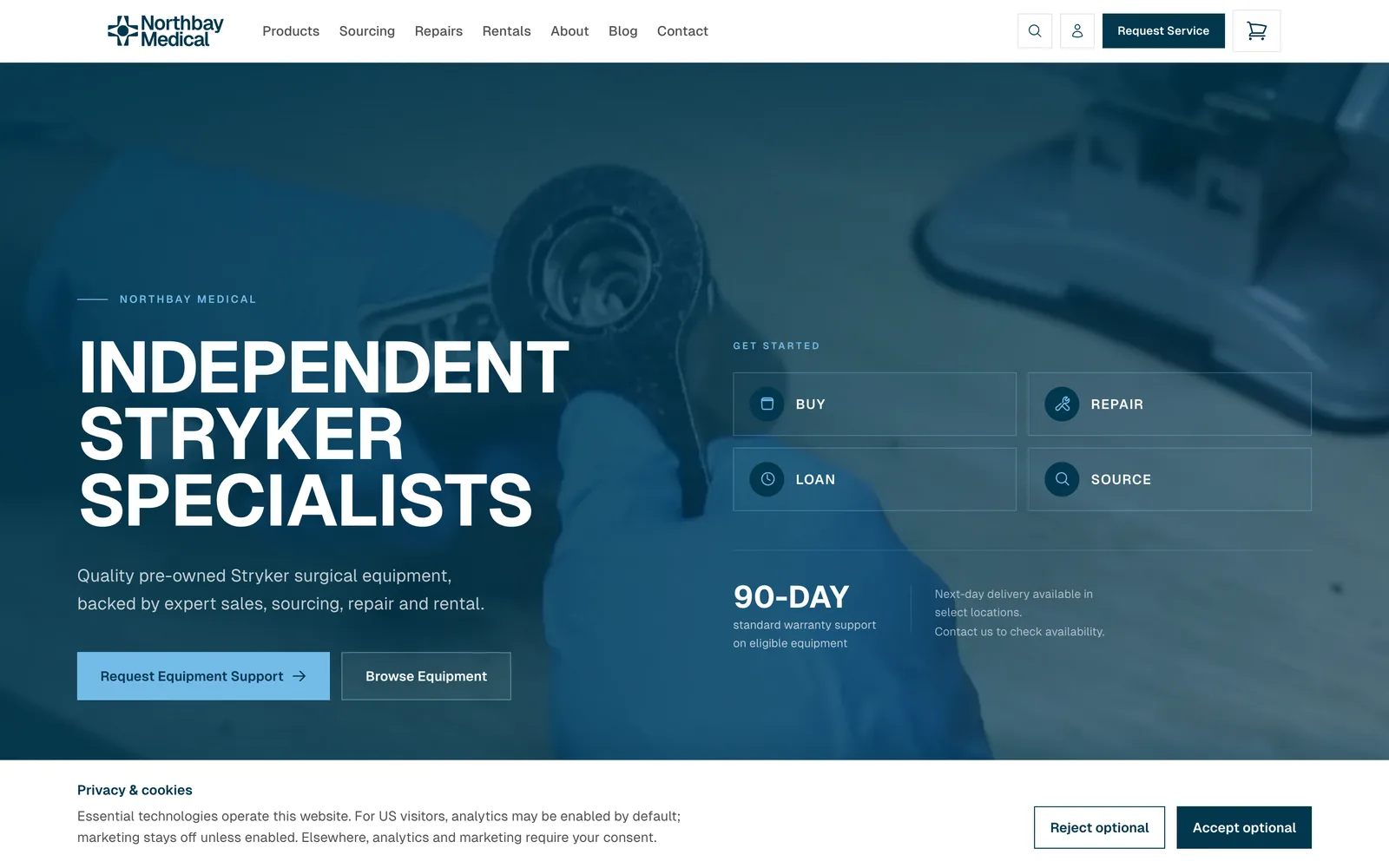
A Shopify-backed storefront with repair, sourcing and loaner journeys feeding one enquiry list.
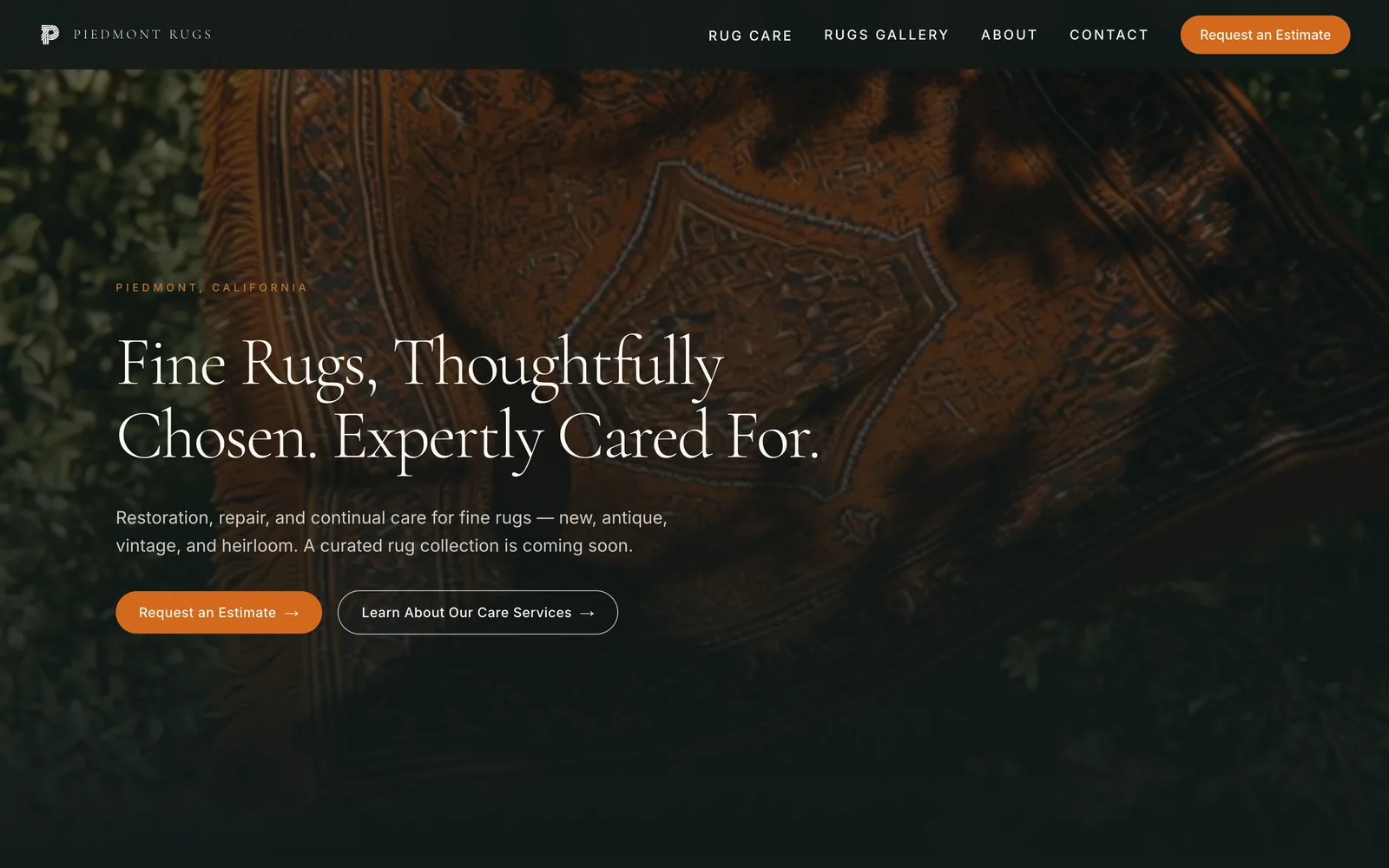
A rug-care and restoration site for an East Bay rug house, with photo-attached estimate requests.
Stack
FAQ
It means many customer organisations use one running copy of the product, each with its own private data. Getting this right early is what keeps one customer from ever seeing another's information.
Usually yes. A focused first release gets you real feedback sooner and costs less than a full platform. We help you choose what goes in and design it so later features slot in cleanly.
We integrate Stripe for plans, invoices and webhooks, and can connect it to Xero or QuickBooks. Tax treatment is a decision for your accountant, and we build the product to support what they advise.
Yes. We start with a short review of the code, data model and hosting, then tell you plainly what to keep, fix or rebuild. The cost depends on scope and what we find.
Related services
Tell us your business requirements, and we'll come back with a plan to deliver.