
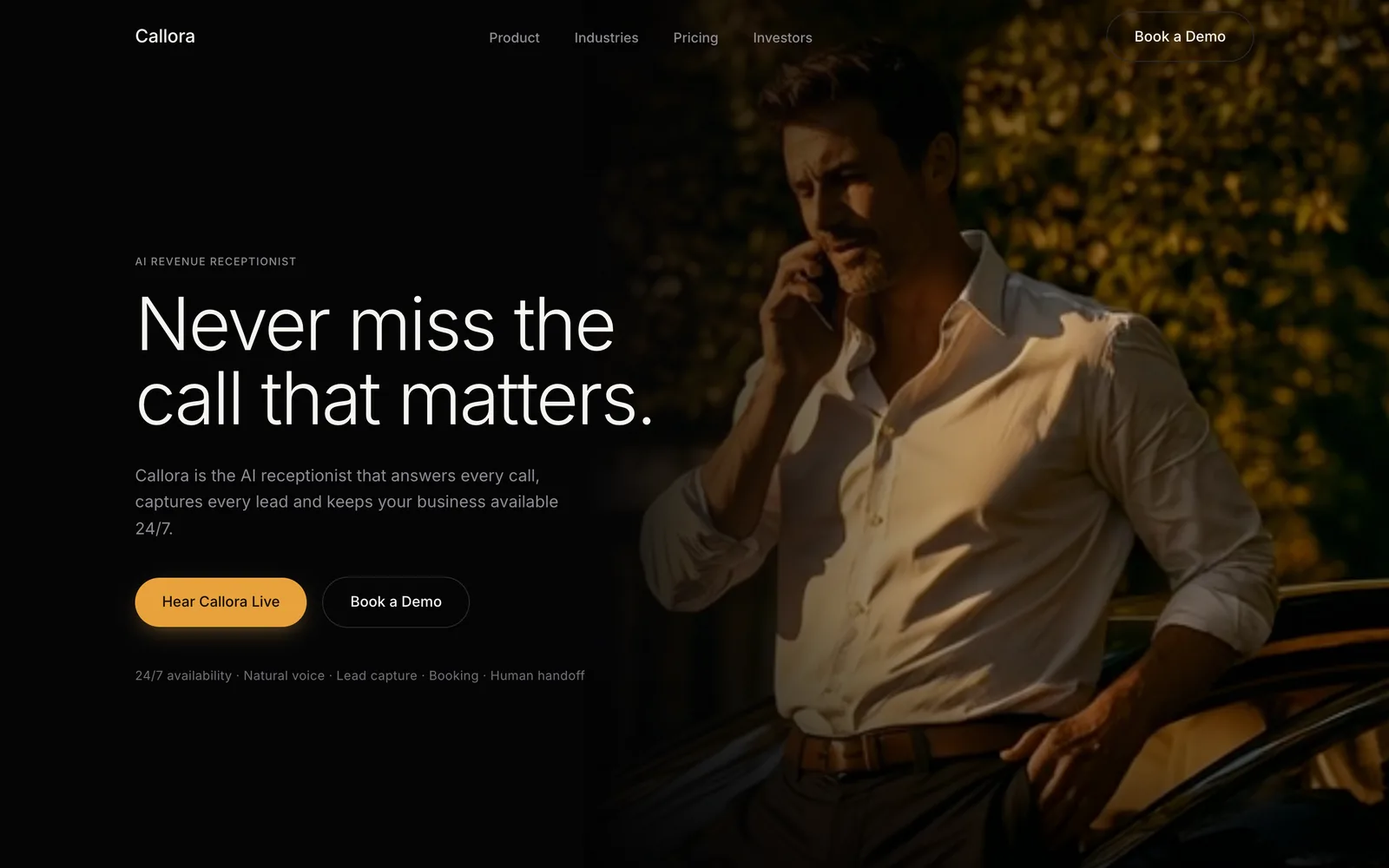
Coming soonAI voice receptionist for service businesses
Callora
A website and interactive demonstration for an AI receptionist concept.
- React
- Vite
- TypeScript
- +2 more
ServicesAI Copilots & Agents
AI agents and copilots that read your own records, draft the next step and wait for a person to approve it. Everything they do runs in your accounts and is written to an audit log.
Agent draft · Fernhill Studio
Thanks for getting in touch. Would Tuesday at 10:00 suit for a call?
Read: CRM record, 2 approved documents. Nothing leaves your accounts.
How it works
One enquiry, followed through the loop. The agent pauses for a person before it changes anything. Try Approve and Dismiss when it stops.
Step 1 of 6
Agent view
Inbox · new
Fernhill Studio
Hi, could you send a quote for a new shop front? We would like to start next month.
Agent message
New enquiry from Fernhill Studio. Let me check what we already know.
Guardrails
Audit log
Trigger. A new enquiry email arrives and wakes the agent.
Who it is for
What we build
Ask for a record by description, serial number or customer and get the matching item, as in our inventory demo.
A side panel in your dashboard that explains a screen, summarises a record or drafts the next step.
Agents that propose changes, such as a re-planned week or a follow-up email, and apply them only after approval.
Policies, manuals and past work indexed so answers cite the source they came from.
OpenRouter lets us pick the right model per task, with prompts, limits and logging that you can inspect.
How we work
We start with a single task people already do, such as finding a part or answering a customer query.
We connect the sources, clean what is needed and decide what the assistant may and may not read.
We try it on genuine examples, record where it fails and tighten prompts, retrieval and permissions.
It goes live with approvals and logs switched on, and we review its answers with you before widening its role.
Selected work
Each project is labelled Live, Demo or Coming soon, so you can see what is in use today and what is on its way.
A website and interactive demonstration for an AI receptionist concept.
Stack
FAQ
We agree where your business data is stored and which AI providers may process relevant information. We explain what information is shared and what controls are available for each project.
Only where you decide it should. By default, agents suggest and a person approves, and every action is logged. Low-risk steps can be automated later once you trust the results.
It can, which is why answers point to their source and risky actions need approval. We test against real examples before launch and keep reviewing results afterwards.
Not necessarily. Many useful assistants work on the records and documents you already have. We review what exists during scoping and tell you honestly if it is not yet enough.
Related services
Tell us your business requirements, and we'll come back with a plan to deliver.